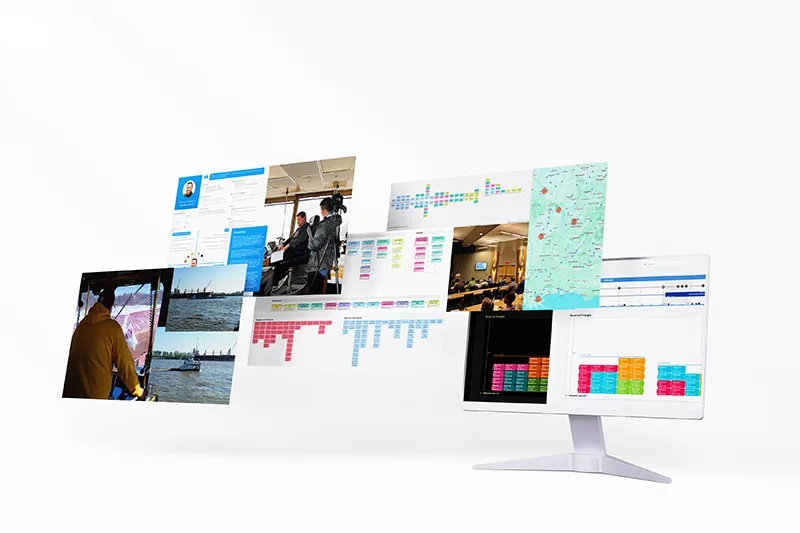
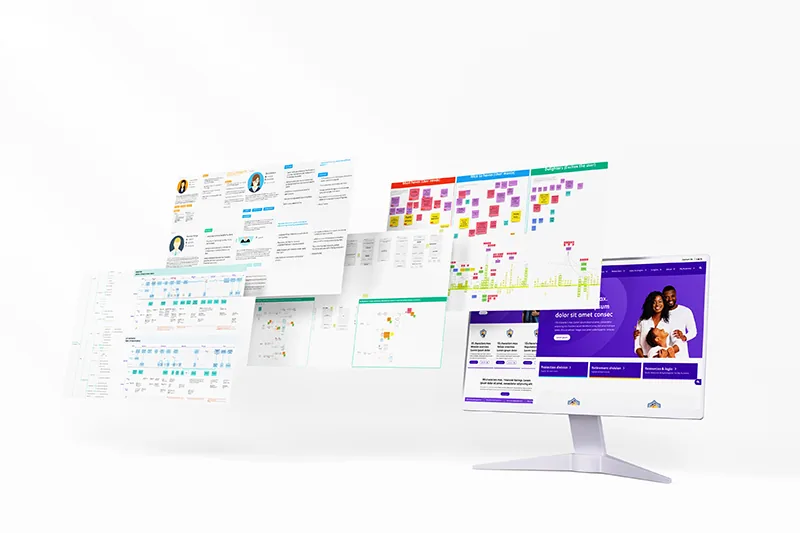
Before
- Knowledge was fragmented across tools and owners.
- Verification depended on personal memory.
- AI experiments used inconsistent data connections.
- Every new assistant required new integration work.
As a Principal Product Designer consulting on the project, I shaped the product strategy and designed a governed knowledge layer that gave approved AI workflows consistent, source-grounded access to company knowledge.
Client identity and system names are anonymized; unapproved metrics and production screenshots are omitted.
Principal Product Designer (Consultant)
Governed knowledge layer with reusable MCP access
Validated through a limited pilot
One governed layer supported multiple approved AI workflows
Years of policies, research, project decisions, operating procedures, training material, and domain expertise were spread across disconnected systems.
Employees often knew the information existed, but finding the reliable version depended on knowing the right person, tool, folder, or search term.
A typical request moved through a fragmented journey: search several tools, ask a colleague, compare versions, reconstruct context, and finally decide what to trust.
Early AI experiments made this problem less visible rather than solving it. A model could summarize whatever it retrieved, but a fluent answer could still combine stale, incomplete, or contradictory information.
Connected did not mean trusted.
The company needed a product layer responsible for structure, provenance, permissions, freshness, and recovery before AI-generated output could be dependable.
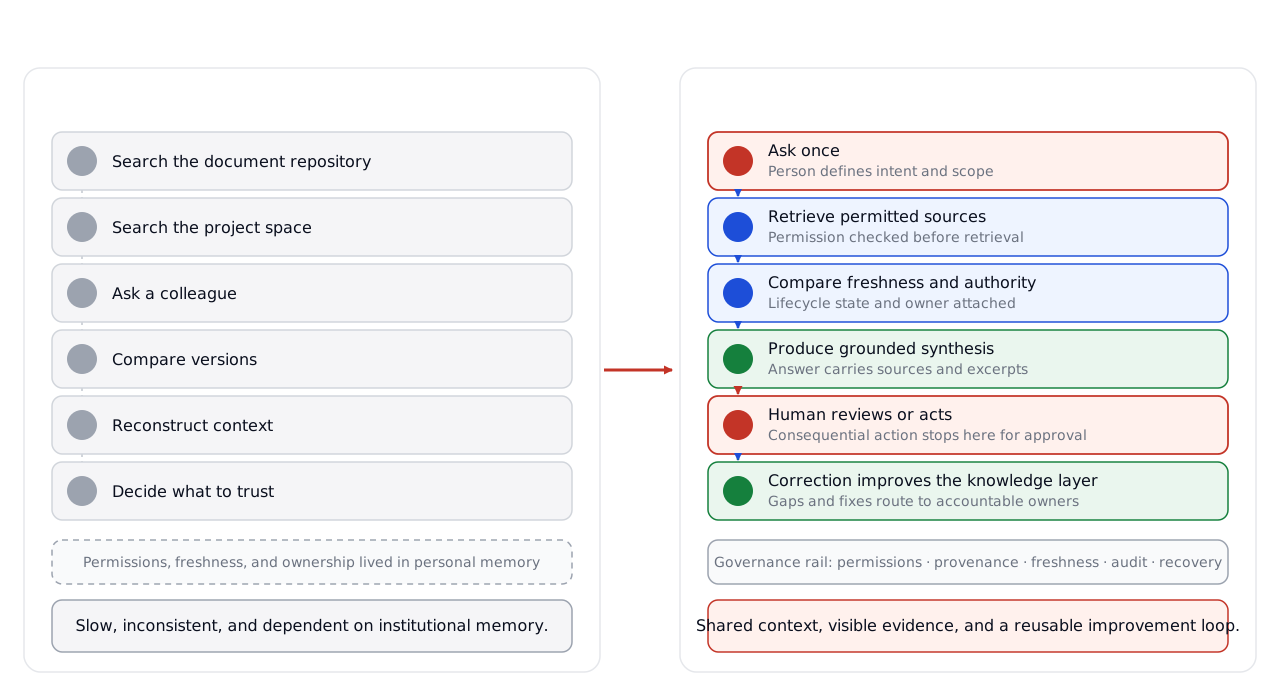
Discovery showed that a conversational interface alone would reproduce the company’s fragmented knowledge behind a more fluent surface. I reframed the work around the evidence people needed, the actions AI could safely prepare, and the governance required for reuse.
The core need was not “give me a summary.” It was “help me reach a trustworthy answer and let me inspect the evidence.”
Designed: Product framing, research approach, information architecture, AI interaction and state models, and usability validation.
Advised on: Knowledge architecture, AI evaluation criteria, pilot scope, and governance decisions.
Partnered with: The product sponsor, engineering, data and AI specialists, security and governance partners, domain experts, and knowledge owners.
Evidence: Source ownership, permissions, terminology, and freshness already varied across systems. Reconnecting each assistant independently would reproduce those inconsistencies.
Decision and trade-off: Invest in a shared information model and MCP access contract. It required more upfront governance and metadata work, but made permissions, provenance, and retrieval behavior reusable across approved AI workflows.
Evidence: People needed to distinguish retrieval from synthesis, inspect the primary record, and recognize weak or conflicting evidence before acting.
Decision and trade-off: Define a response contract that carried capability state, sources, ownership, freshness, permissions, and recovery. Testing added explicit unable-to-answer and conflict states, accepting more disclosure in exchange for verifiability.
Evidence: Restricted information, source conflicts, and policy changes required accountable judgment that the system could not own.
Decision and trade-off: Let AI retrieve, compare, and prepare while people approved changes and external action. This was slower than full automation, but preserved correction, auditability, and a legitimate recovery path.
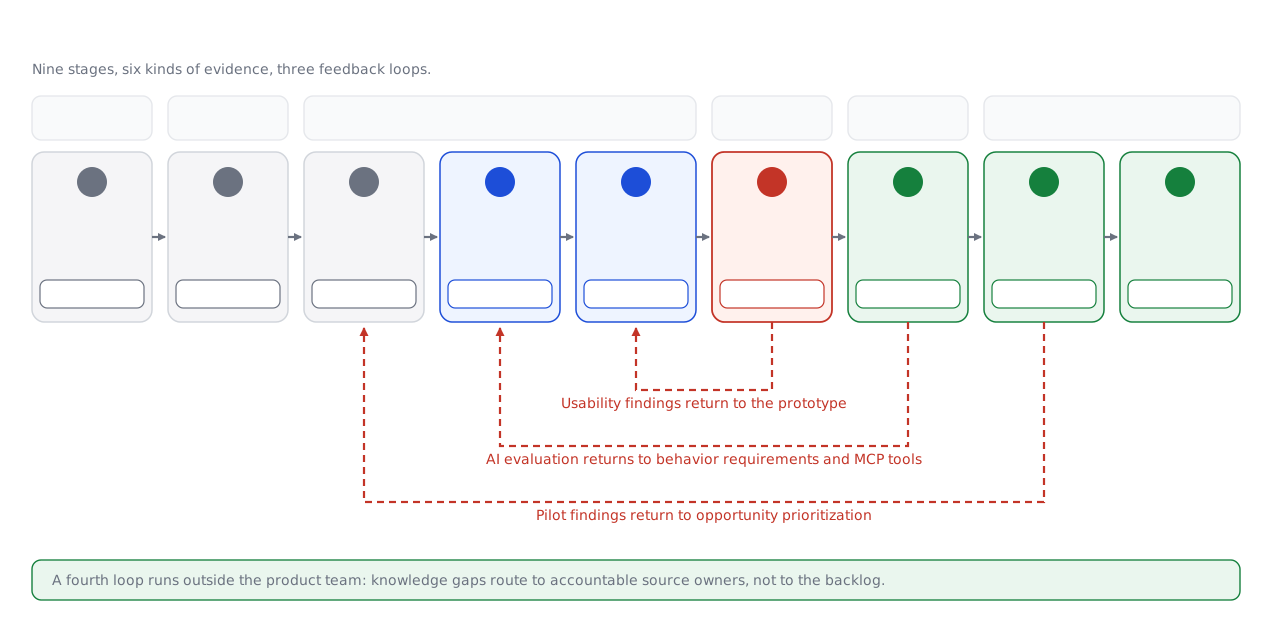
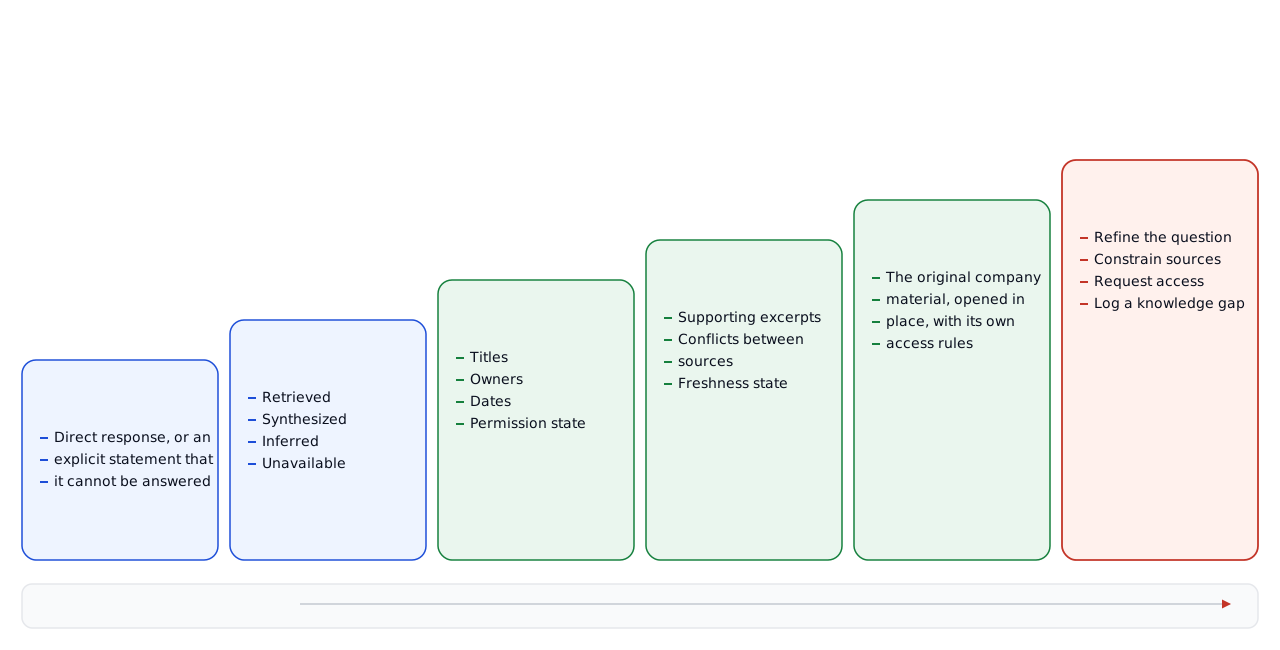
Employees needed speed without losing evidence. The experience began with a direct answer, then kept capability state, sources, excerpts, ownership, freshness, permissions, the primary record, and recovery one step away.
An operations lead asks which policy applies to an older contract. Retrieval finds current and superseded records with different dates and owners. Instead of combining them into a confident summary, the product labels the conflict, shows the relevant excerpts, identifies the accountable owners, and offers a resolution path.
This illustrative test case is derived from the validated conflict, freshness, and recovery requirements; it is not presented as a production screenshot or client quotation.
A concise answer or an explicit unable-to-answer state, never fluent output without supporting evidence.
A clear label for retrieved, synthesized, inferred, or unavailable output, including weak-evidence and conflict states.
Source count, title, owner, supporting excerpt, freshness or lifecycle state, and permission boundary.
Open the full record, refine or constrain sources, request access, or log a knowledge gap.
Instead of letting every assistant create its own connection to company data, the product introduced one shared layer between approved sources and AI experiences.
MCP was not the whole product. It was the reusable access contract for search, permissions, source inspection, controlled updates, and the boundary where consequential action stopped for human review.
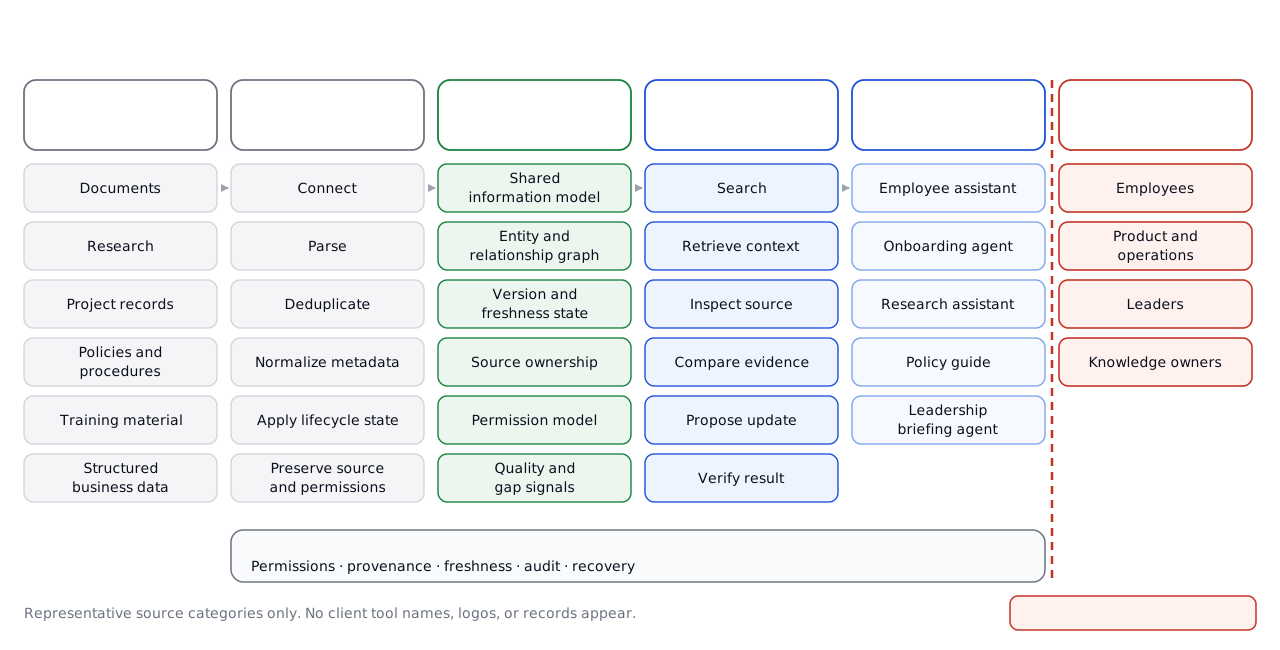
The shared contract applied permissions before information reached a model, standardized retrieval and inspection, reduced vendor coupling, and let specialized assistants reuse the same governed capabilities.
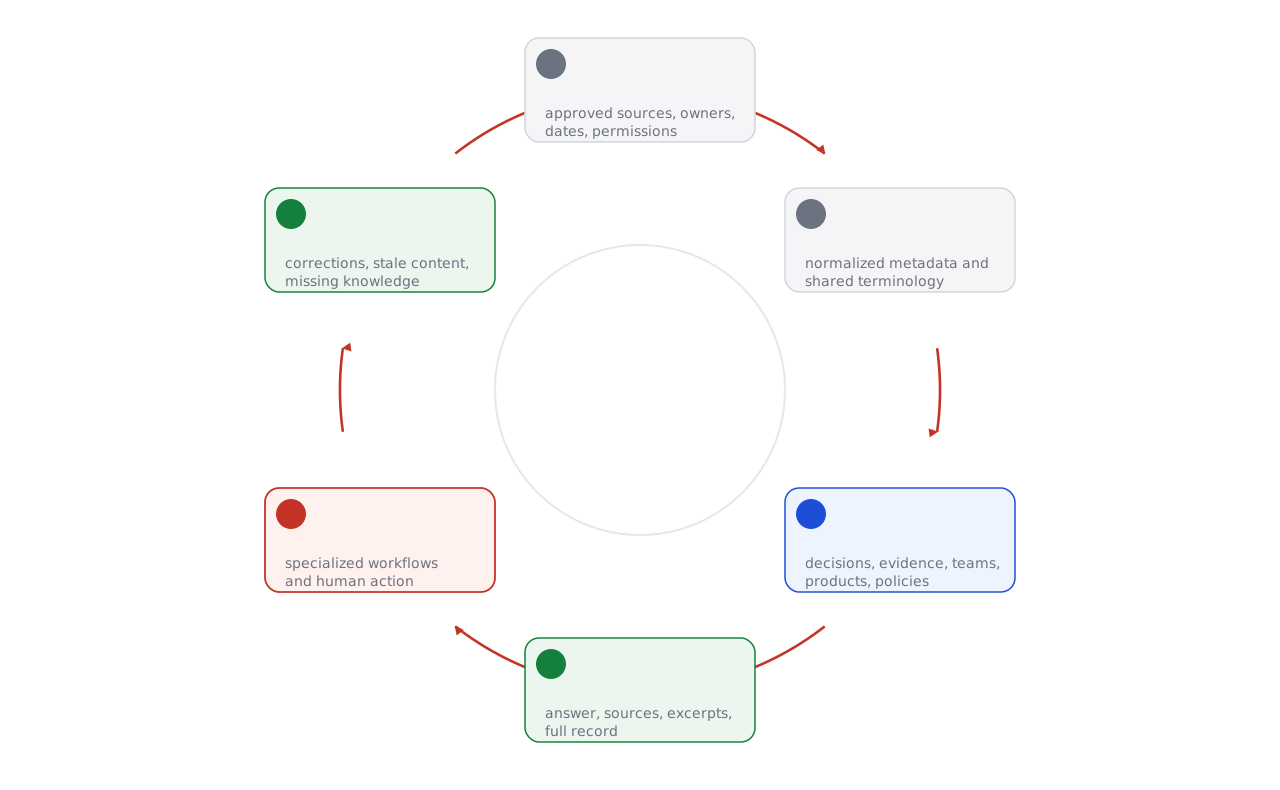
Connect approved sources with owners, dates, permissions, and lifecycle state.
Normalize metadata and shared terminology.
Link decisions, evidence, owners, policies, products, and later changes.
Return answers with sources, excerpts, freshness, and the full record.
Use governed knowledge inside specialized workflows with human action boundaries.
Turn corrections, stale content, and missing answers into quality signals.
The strongest trust pattern was not a confidence score. It was making responsibility legible.
The system could retrieve, compare, and prepare. People defined intent, resolved ambiguity, approved consequential changes, interpreted sensitive evidence, and owned external action.
Human approval was designed as an inspectable lifecycle rather than a final modal. Users could preview, edit, reject, constrain, retry, and recover without losing useful work.
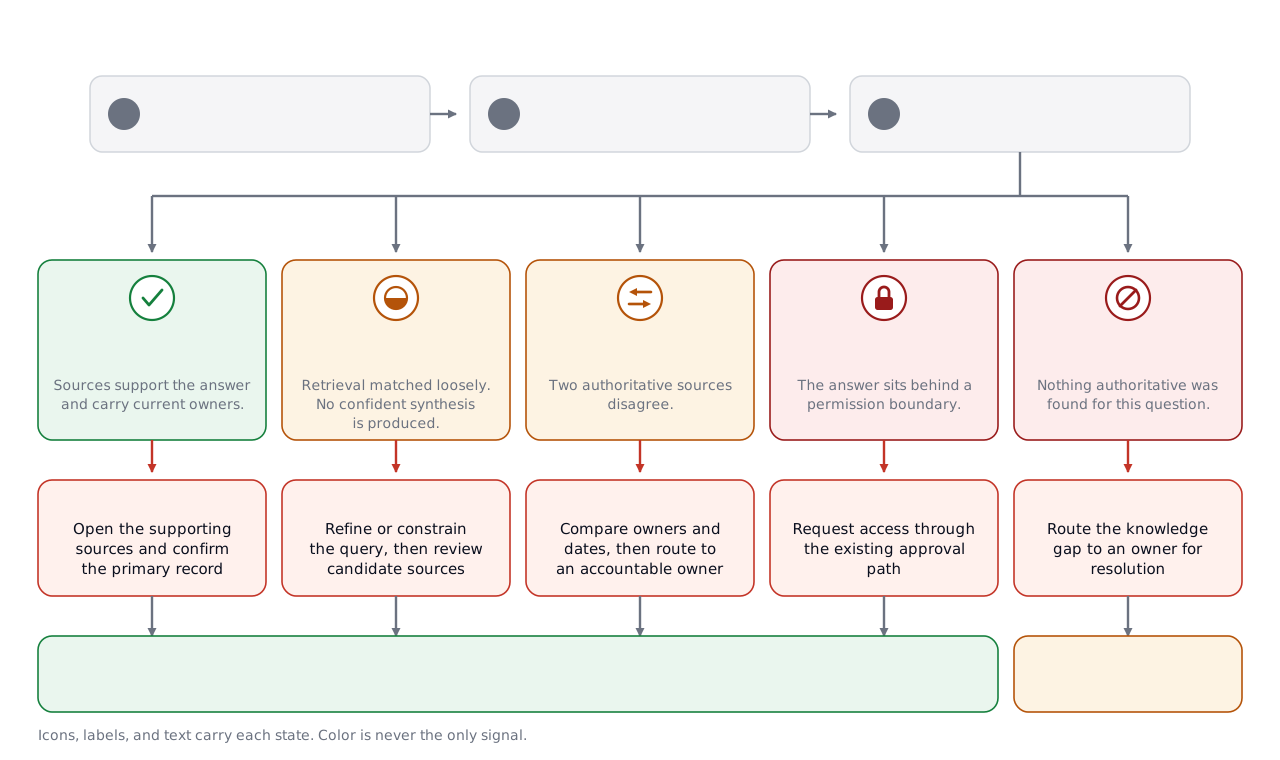
| Condition | What the system did | Human owner or next step |
|---|---|---|
| Weak or missing evidence | Avoided confident synthesis and showed what was checked | Refine the question or log a knowledge gap |
| Conflicting sources | Presented both sources, owners, and dates | Accountable knowledge owner resolved the conflict |
| Stale information | Labeled lifecycle state and opened the current record | Source owner reviewed or updated it |
| Restricted information | Explained the permission boundary | Existing access-request process handled the decision |
| Consequential action | Stopped before execution and showed a preview | Authorized person approved, changed, or rejected it |
I evaluated the concept and pilot against my Eight Heuristics for Generative and Agentic AI Products: capability and confidence, provenance, bounded autonomy, recovery, accessibility under change, inspectability, safety boundaries, and process visibility. This was a structured design walkthrough; live accessibility testing, production telemetry, and formally sampled evaluation remained separate activities.
One governed knowledge layer supported multiple approved AI workflows in a limited pilot. The product made source evidence, permissions, freshness, and human review reusable instead of rebuilding those behaviors for every assistant.
The most important shift was from isolated data connections to reusable company knowledge that people could verify.
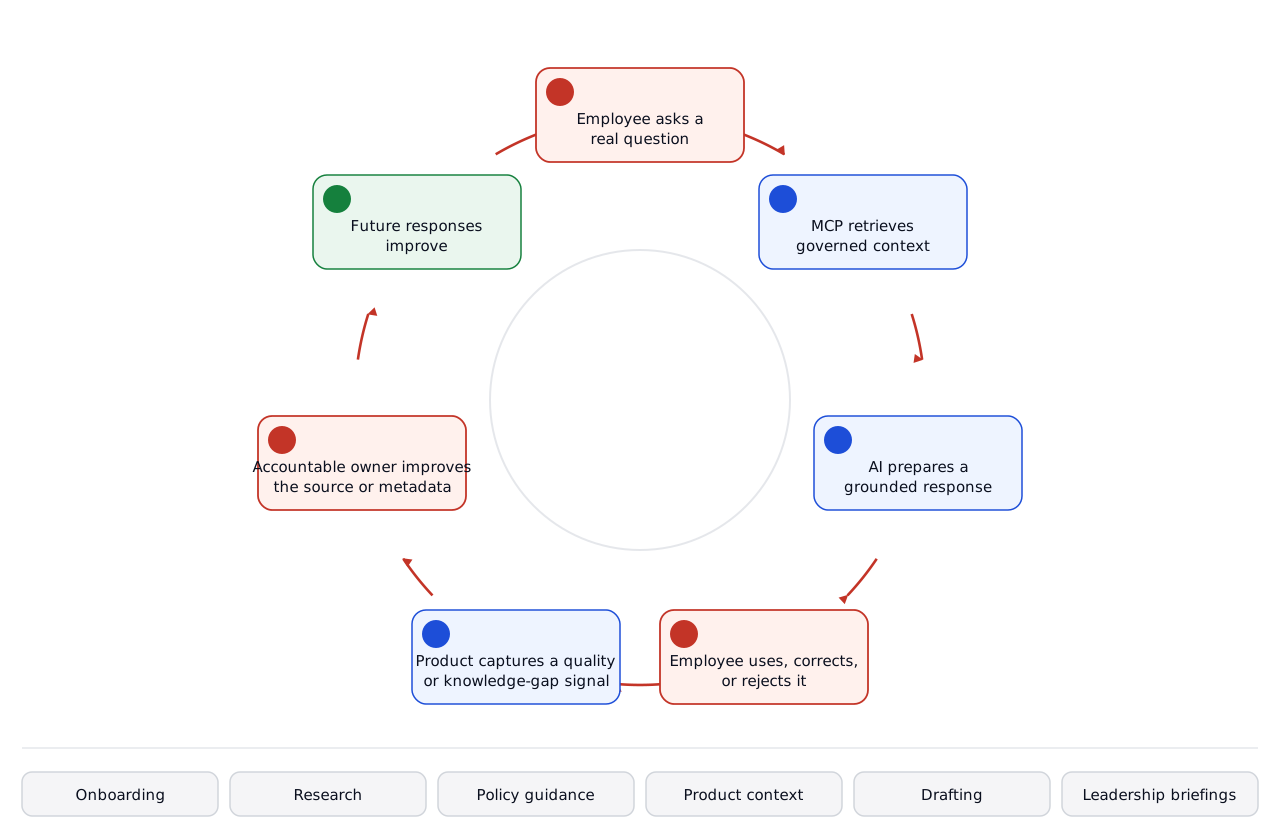
The same governed capabilities could support research and decision retrieval, onboarding, policy guidance, product context, drafting, knowledge-gap detection, pattern discovery, and leadership briefings.
| Evidence | What it demonstrates | Boundary |
|---|---|---|
| Connected-source inventory | Real integration scope | Does not prove adoption |
| Retrieval test set | Source correctness on tested questions | Does not cover every question |
| Permission tests | Access rules applied as designed | Does not replace governance review |
| Usage by approved workflows | Pilot adoption | Does not prove productivity |
| Resolved knowledge gaps | The improvement loop operated | Does not quantify business value |
I did not begin with a model or interface. I began with the company’s information flows, employee needs, risks, and adoption constraints.
I translated that evidence into the product strategy, information architecture, response contract, AI state and recovery model, reusable MCP requirements, evaluation criteria, and pilot plan—in partnership with the teams responsible for implementation, security, governance, and source ownership.